
Security surveillance equipment is exposed to the outdoors for extended periods. Four types of stress—moisture and condensation, salt fog and chloride ions, sulfurous gases, and waterproofing failure—combine to corrode the camera’s mainboard, power supply board, and connectors. This leads to corrosion, short circuits, poor contact, and signal abnormalities, ultimately causing the equipment to freeze, lose video feed, or fail entirely. These faults worsen progressively, remaining hidden in the early stages before becoming severe later on. As a Shenzhen-based electronic coating manufacturer, Shenzhen Zhongfu uses ultra-thin electronic coatings ranging from 0.1 to 5 μm to establish an integrated waterproof protection system for surveillance equipment and turnstiles. This system fully seals all gaps in PCBs and connectors, providing salt spray resistance of 500–2,000 hours, sulfurization protection, and an insulation strength of 2,500 V/mil, thereby blocking corrosion pathways at the source. This article serves as the definitive guide for selecting security surveillance protection solutions, covering failure mechanisms, parameter specifications and pricing, a dedicated page on turnstile insulation, and process specifications.
Technical References: Mechanisms of Salt Spray Corrosion Resistance and Coating Design for RJ45 Connectors in Industrial Environments (Technical Post on Yewei Network) | Technical Parameters for the Full Series of Shenzhen Zhongfu Nano Waterproof Coatings
Security surveillance serves as the core infrastructure for Safe Cities, smart campuses, and community entry/exit points. Cameras operate 24 hours a day without interruption and are continuously exposed to extreme outdoor environments. Industry data shows that 13.7% of IP68 devices exhibit internal condensation after aging tests under high-temperature and high-humidity conditions. User complaints regarding “blurry images on rainy days” and “device crashes due to water ingress” account for as much as 74.3%. The failure rate of non-marine-grade cameras in coastal areas reaches 83% within 11 months, with circuit board moisture protection failure being the primary cause.
Failures caused by the failure of protective measures for electronic components in security surveillance systems primarily manifest as corrosion, short circuits, poor contact, and signal abnormalities, ultimately leading to device crashes, image loss, or functional failure. Moreover, most failures deteriorate progressively:
Corrosion leads to image loss or abnormalities: When the camera’s image sensor board and ISP processing board are exposed to moisture and corrode, the photosensitive elements produce abnormal outputs, resulting in noise, streaks, color distortion, or even a completely black screen; condensation inside the lens causes blurred images, making it impossible to recognize faces or license plates, thereby rendering the surveillance footage useless for evidence;
Short circuits cause equipment to freeze or burn out: Moisture forms a continuous film on the PCB surface, causing leakage and short circuits between adjacent circuits. Short circuits in high-current areas of the power supply board can directly burn out components, causing the equipment to suddenly freeze and become unresponsive; in severe cases, this poses a fire hazard;
Poor contact leading to signal interruptions or intermittent failures: Salt fog corrodes connector terminals, Ethernet ports, and power terminals, causing contact resistance to surge from 5 mΩ to over 100 mΩ. Video signals become intermittent, and unstable PoE power supply causes cameras to frequently go offline. Failures may appear and disappear with vibrations or temperature changes, making troubleshooting extremely difficult;
Functional failure leading to system paralysis: Sulfurization gases corrode the silver-plated brackets on LED fill light boards, resistor electrodes, and MLCC terminal electrodes. Resistance values gradually drift until an open circuit occurs, causing the fill lights to fail, infrared night vision to malfunction, and read/write errors in storage modules, resulting in the gradual loss of the entire unit’s functionality.
Industry Data: According to statistics from a third-party security operations and maintenance provider, the failure rate of electronic components in outdoor surveillance cameras rises to 42% after two years of use, with over 65% of these failures directly attributable to moisture ingress in circuit boards caused by humidity, salt fog, and sulfuric corrosion; in coastal regions, the failure rate of surveillance equipment due to corrosion is 3–5 times higher than in inland areas, and salt fog accelerates the rate of metal corrosion by 5–10 times; 58% of moisture-related failures originate at cable entry points, with corrosion at tail cable connectors being a frequent failure point; a single on-site repair, including parts, costs over 1,500 yuan, and the failure recurrence rate is as high as 40%.
The challenges faced by security surveillance systems are not isolated to a single form of corrosion, but rather the synergistic effects of moisture condensation, salt spray, sulfide gases, and waterproofing failure, creating a corrosive environment that is even more destructive than any single factor alone:
1. **Humidity and Condensation**: Diurnal temperature variations can lead to condensation, where water vapor penetrates into the device cavity and forms a water film on the PCB and pin surfaces, triggering electrochemical migration and metal oxidation, resulting in leakage, short circuits, or signal distortion. Damp plastic-encapsulated devices may also experience internal delamination and bond wire breakage during temperature changes. During the rainy season or when humidity remains above 90% RH, even if liquid water does not enter the device, the PCB will be immersed in "gaseous water" for extended periods, and corrosion may silently occur when the circuit board lacks adequate moisture resistance;
2. **Salt spray corrosion**: In coastal areas, salt spray deposits dissolve in water to form an electrolyte, and chloride ions damage the metal passivation film, accelerating pitting corrosion, crevice corrosion, and coating detachment, directly corroding components and circuits. Chloride ions penetrate through pinholes in the gold plating layer of connectors to reach the copper/nickel substrate, generating insulating corrosion products such as basic copper chloride (green) and copper oxide (black), which reduce reliability and increase failure rates;
3. **Sulfurization corrosion**: Sulfur-containing materials (inferior rubber, insulation cotton, rubber seals) around the computer room or equipment emit hydrogen sulfide (H₂S) and sulfur dioxide (SO₂). Under the influence of temperature and humidity, these gases penetrate the micropores of the component protective layer and react with copper foil, pins, and silver-plated electrodes to form black sulfides (reaction formula: 2Ag + S²⁻ → Ag₂S + 2e⁻). This results in open or short-circuit failures in the vias. The process can take several months to several years and is highly concealed. The laboratory tests may meet the standards, but the resistance value increases abnormally after several months of on-site operation;
4. **Waterproof failure**: After the sealing ring ages and hardens, the tail plug is damaged, and the desiccant loses its effectiveness, moisture directly infiltrates the cavity. At the least, it leads to fogging and blurry images in the lens, and at worst, it causes extensive corrosion and scrap of the circuit board. According to PSA technicians' statistics, 58% of moisture-related failures originate from cable connector entrances. Common causes include not installing drip loops and uneven application of sealant during installation. Waterproofing of turnstiles and protection of monitoring equipment need to be considered simultaneously in entrance and exit scenarios.
| Component Name | Main Corrosion Stress | Failure Consequence | Traditional Protection Method | Limitations |
| Camera ISP / Sensor Board | High Humidity Condensation, Salt Spray | Image Anomaly, Frame Loss | Housing Sealing | Water Vapor Penetration after Sealant Aging |
| Power Supply Board / PoE Module | Salt Spray, Moisture, High Voltage | Short Circuit, Burnout, Freeze | Potting Compound | Heavy Weight, Non-repairable, Poor Heat Dissipation |
| Network Interface (RJ45/PoE) | Salt spray chloride ion, terminal oxidation | Communication interruption, frequent offline | Gold-plated terminals | Pinhole penetration, contact resistance surge |
| LED fill light / infrared light board | Sulfur gas, high humidity | Lamp beads turn black, night vision failure | Potting + lens | Sulfur infiltrates through the cracks of the bracket |
| Storage module / SD card socket | Moisture, vulcanization | Read-write errors, lost recordings | No protection / dispensing | Dispensing aging, unmaintainable |
| Terminal strip/tail wire | Salt spray, moisture | Loose wiring, unstable power supply | No protection | 58% of moisture-related failures stem from this |
| Gate linkage control board | Salt spray, vibration, temperature difference | Gate does not operate, linkage failure | Three-proofing paint spraying | Thick film hard and brittle, BGA bottom blind area |
**Core contradiction**: The housing sealing of security surveillance equipment can only block liquid water, but cannot prevent the infiltration of water vapor, salt spray ions, and sulfide gases. Traditional conformal coating is thick, hard, and brittle, unable to cover the bottom of BGA and connector gaps, and prone to cracking under continuous temperature cycling of the equipment. It is necessary for electronic coating processing manufacturers in Shenzhen to provide a full-chain electronic coating solution from the camera motherboard to the connector, and from the surveillance equipment to the waterproof linkage of the turnstile. The PCBA coating should be coordinated with structural sealing, with equal emphasis on moisture resistance and sulfide resistance of the circuit board.
Shenzhen Zhongfu - a manufacturer of PCBA electronic nano-protective coating agents, has partnered with a doctoral team from the State Key Laboratory of Polymer Materials at Fudan University in Shanghai. They specialize in the research and production of fluororesin coatings, fluorinated fluids, and derivative products. Targeting the characteristics of outdoor environments for security surveillance, they offer a three-in-one electronic protective coating solution combining "nano-coating waterproofing, anti-vulcanization, and high insulation", while also addressing the waterproof linkage needs of surveillance equipment and entrance/exit gates.
Shenzhen Zhongfu Electronic Coating Agent adopts liquid-phase molecular self-assembly film-forming technology, with a controllable coating thickness ranging from 0.1 to 5μm. It achieves comprehensive penetration through capillary force, ensuring moisture-proof and no blind spots on circuit boards:
- **Full PCBA coverage**: The coating penetrates into the gaps below BGA solder balls (<0.2mm), QFN pin gaps, inner walls of vias, and the root of chip pins, achieving 100% coverage in areas that traditional conformal coating cannot reach. The PCBA coating covers every corner, protecting the camera ISP board, power board, and storage module;
- **Connector terminal sealing**: The molecules of the electronic coating agent penetrate into the pinholes and microcracks of the gold/tin plating layer, forming a dense fluorocarbon protective film on the substrate surface. This blocks the penetration paths of chloride ions and sulfide gases, protecting the RJ45/PoE interface, wiring terminal block, and waterproof linkage interface of the turnstile simultaneously;
- **Pin root anti-salt creep**: The coating penetrates along the connector pins to the root of the PCB solder pad, forming a continuous sealed interface. This prevents salt spray from "creeping" along the pins into the interior of the device, addressing the industry pain point that 58% of moisture failures originate from cable connector entrances;
- **LED fill light anti-vulcanization**: The Fluere® 1100/1105 anti-vulcanization coating is specifically designed for silver-plated brackets and LED packaging, effectively blocking vulcanization gases and water vapor to prevent the silver layer from being vulcanized and turning black, which can lead to the failure of infrared night vision;
- **Shield-free design**: The connector slot, FPC cable, and SD card socket do not require special shielding. The entire board is directly coated, and the male and female connectors are simply pressed together to push away the coating and ensure normal conductivity, greatly simplifying the production process for electronic coating processing manufacturers in Shenzhen.
The three-dimensional cross-linked network of Shenzhen Zhongfu Fluorine Nanocoating, centered around C-F bonds (with a bond energy of 485kJ/mol), possesses three major characteristics: superhydrophobic barrier, anti-sulfur penetration, and high insulation stability
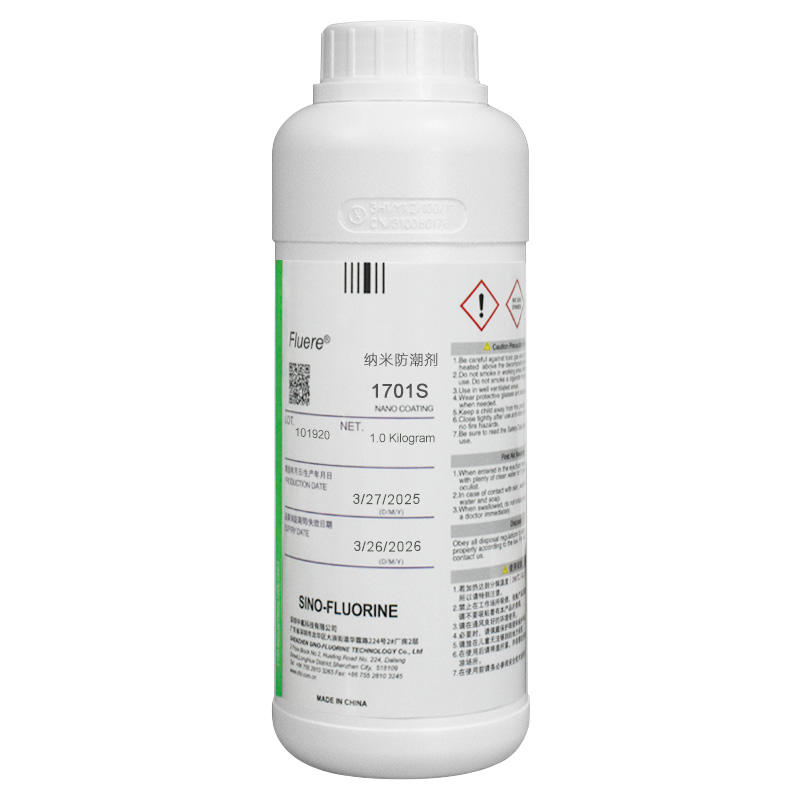
- **Superhydrophobic nano-coating waterproofing**: Fluere® 1701ss boasts a water droplet angle > 160°, creating a lotus-effect micro-nano structure. Salt spray droplets quickly roll off and cannot adhere, preventing the formation of an electrolyte film. With an IP waterproof rating of IPX5-IPX8, it blocks the formation of condensation water films from the source;
- **Sulfurization gas penetration prevention**: The dense fluorocarbon network blocks sulfur-containing gas molecules such as H₂S and SO₂, protecting silver-plated electrodes, LED brackets, and resistor terminal electrodes from being sulfurized. The Fluere® 1100 series has a water contact angle of ≥110°, specifically designed for sulfurization prevention scenarios, addressing gradual and latent failures;
- **High insulation stability**: Dielectric constant of 3.5 at 1kHz, insulation strength up to 2500V/mil, surface resistance ≥10¹²Ω, ensuring insulation safety in high-current areas of the power board and PoE interfaces, with electronic protective coating that does not affect video signal transmission;
- **Resistance to high and low temperatures and flexibility**: It remains unbroken at low temperatures of -40℃ and does not decompose at high temperatures of 270℃. It deforms synchronously with the substrate under thermal shock. In outdoor environments with temperature differences exceeding 60℃ between winter and summer, the coating remains uncracked and unpeeling, ensuring the long-term integrity of the waterproof barrier provided by the nano-coating;
- **Excellent salt spray resistance**: The xflono series has passed a neutral salt spray test for > 2000 hours, while Fluere® 1701ss has passed a test for over 500 hours, far exceeding the 48-96 hours of traditional conformal coatings. It is suitable for coastal and island monitoring scenarios.
As a professional electronic coating processing manufacturer in Shenzhen, Shenzhen Zhongfu provides a full range of electronic coating agent products. The following details the core parameters, application matching, and quotation ranges for security surveillance scenarios, covering all needs of engineers seeking parameters and procurement seeking manufacturers:
| Product Model | Coating Thickness | Core Function | Dual 85 | Salt Spray Resistance | Temperature Resistance | Adhesion | Monitoring Application Components | Quotation (Yuan/kg) |
| Fluere® 1700 Basic | <1μm | Moisture and dust proof for circuit boards | 500h | 200h | -40~270℃ | ≥4B | Indoor machine room switches, storage boards | 300-600 (≥10kg) |
| Fluere® 1700 Standard | 1-5μm | Nano-coating for waterproof and moisture-proof | 1000h | 500h | -40~270℃ | ≥4B | Camera ISP board, network module | 890-1200 (≥10kg) |
| Fluere® 1700 Enhanced | 5-10μm | High protection, salt spray resistance | 1500h | 800h | -40~270℃ | ≥4B | Coastal monitoring power board, gate control board | 1800-3500 (≥10kg) |
| Fluere® 1701ss | 0.5-2μm | Superhydrophobic, internal waterproof | >1000h | 500h | -40~150℃ | ≥4B | Camera, PoE interface, communication board | 900-1200 (by volume) |
| Fluere® 1100/1105 | 0.075-2μm | Anti-vulcanization, silver plating protection | — | — | -40~270℃ | ≥4B | LED fill light board, infrared light board | 2100-2300 (by quantity) |
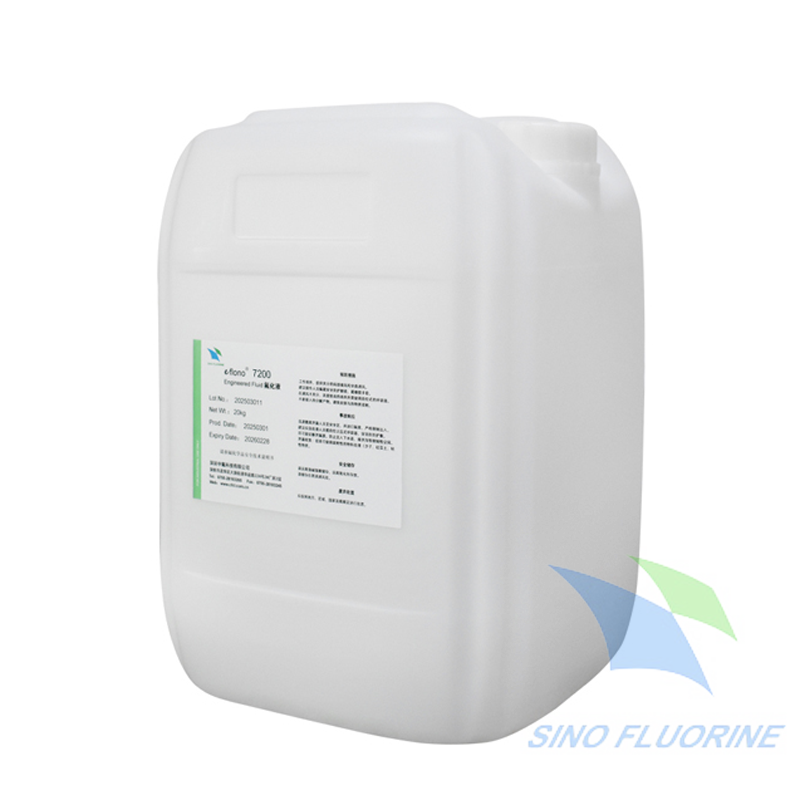
| xflono 1020/1030 | 5-20μm | High salt spray resistance, PFAS compliant | >1500h | >2000h | -55~300℃ | ≥4B | Coastal/reef monitoring full board, gate linkage board | 1300-1500 (by quantity) |
Quotation Note: The unit price for 1-4kg sample orders is relatively high. For orders between 5-9kg, a mid-volume discount is available. For orders of ≥10kg, the lowest price is offered for mass production purchases. One kilogram of electronic coating agent can treat approximately 15-30 square meters of PCBA area. The cost of protecting a single camera motherboard is only 0.3-1.5 yuan, which is significantly lower than the maintenance cost of 1500 yuan per instance. Customers who purchase in bulk enjoy free on-site production line debugging and personnel training. Shenzhen electronic coating processing manufacturers provide complete test reports and process manuals.
Addressing the high-frequency search demand for "electronic coating agent for gate insulation", and considering the access control scenario where security monitoring is integrated with barrier gate operations, Shenzhen Zhongfu, as a professional electronic coating processing manufacturer in Shenzhen, offers a comprehensive solution for gate + PCBA insulation protection. This solution directly specifies insulation levels, voltage resistance parameters, gate construction steps, and corresponding product models, catering to all needs of engineers seeking parameters and procurement seeking manufacturers.
| Parameter | Industry Requirement | Actual Measurement of Shenzhen Zhongfu xflono 1030 | Actual Measurement of Shenzhen Zhongfu Fluere® 1700 Enhanced | Corresponding Standard |
| --- | --- | --- | --- | --- |
| Dielectric Strength | ≥1500V/mil | 2500V/mil | 2500V/mil | IPC-CC-830C |
| Dielectric Constant (1kHz) | ≤4.0 | 3.5 | 3.5 | IPC-CC-830C |
| Surface resistance | ≥10¹²Ω | 10¹³Ω | 10¹³Ω | IEC 60093 |
| Withstand voltage (AC) | ≥2500V/1min | 3000V/1min no breakdown | 3000V/1min no breakdown | GB/T 1408.1 |
| Dual 85 post-insulation | ≥10¹⁰Ω | 10¹²Ω (1500h) | 10¹¹Ω (1500h) | IEC 60068-2-78 |
| Flame Retardant Rating | V-0 | V-0 | V-0 | UL 94 |
| IP Waterproof Rating | ≥IPX5 | IPX7-IPX8 | IPX6 | IEC 60529 |
| Salt spray resistance | ≥500h | >2000h | 800h | GB/T 10125 |
In the access control system, the surveillance camera is linked with the barrier gate, and the insulation protection focuses on different aspects for each component:
- **Gate motor drive board**: High-current circuit (220V AC or 24V DC/10A or above), insulation failure may cause leakage, short circuit, or even motor burnout. The PCBA coating needs to ensure creepage distance in high-voltage areas, and it is recommended to use xflono 1030 or Fluere® 1700 enhanced type;
- **Monitoring power board / PoE module**: AC-DC conversion, PoE power supply, insulation safety between the primary and secondary sides is crucial, and electronic protective coating is required to ensure surface resistance in the isolation area to prevent cross-zone leakage caused by salt spray electrolyte. We recommend xflono 1030;
- **Camera ISP/Network Board**: Low-voltage high-sensitivity circuit, prone to image noise and recognition failure after exposure to moisture. The primary concern for the circuit board is moisture resistance. We recommend Fluere® 1701ss ultra-thin coating, which does not affect the heat dissipation of the camera module;
- **Gate linkage communication interface**: RJ45/RS485/WiFi module. The linkage signal is interrupted due to salt spray corrosion of the connector. The nano-coating waterproofing needs to cover the connector pins. Fluere® 1701ss is recommended;
- **LED fill light / turnstile indicator light**: Sulfur gas causes the silver-plated bracket to turn black and its brightness to decrease, necessitating a specialized anti-sulfur coating. We recommend Fluere® 1100/1105.
As a professional electronic coating processing manufacturer in Shenzhen, Shenzhen Zhongfu provides standardized construction processes for access control system production lines:
1. **PCBA pre-processing (foundation of waterproofing for turnstiles and monitoring protection)**:
- Clean and remove flux residues, ensuring ionic contamination level is ≤1.56μg/cm² NaCl equivalent;
- Pre-bake at 60-80℃ for 30 minutes to eliminate moisture inside the board and ensure the moisture-proof effect of the circuit board;
Ensure that the surfaces of high-current terminals and connectors are free of oil stains and fingerprints to ensure the adhesion of electronic protective coatings.
2. **Differentiated application of electronic coating agents**:
- For the power board/driver board, we recommend xflono 1030 (coastal) or Fluere® 1700 enhanced (inland), with a thickness of 8-12μm or 3-5μm;
- For the camera board/communication board, we recommend Fluere® 1701ss, with a thickness ranging from 0.5 to 2μm;
- For LED light boards, we recommend Fluere® 1100/1105 with an anti-vulcanization coating, with a thickness ranging from 0.075 to 2μm;
- Dip coating for 5-8 seconds or low-pressure spraying to ensure sufficient wetting of the connector pin root, BGA area, and high-current terminals.
3. **Curing**:
- The xflono series should be left to dry for 20 seconds at room temperature, and it is recommended to bake at 60-70℃ for 15 minutes to enhance cross-linking;
- The Fluere® series is surface dry at room temperature after 3 minutes, and fully cured after baking at 60-70℃ for 20 minutes;
- Fluere® 1100 anti-sulfurization coating dries in seconds at room temperature without the need for heating, making it suitable for heat-sensitive LED components.
4. **Insulation and gate waterproof quality inspection**:
- UV fluorescence inspection for coating uniformity, ensuring no missed areas or paint buildup;
- Voltage withstand test: 3000V AC/1min, no breakdown, insulation resistance ≥10¹²Ω;
- After 500 hours of salt spray sampling inspection, the change rate of connector contact resistance is ≤20%;
- Verification of waterproof rating for turnstiles: IPX5-IPX7 water spray/immersion testing.
| Deployment Environment | Recommended Combination Plan | Expected Protection Lifespan | Protection Cost per Unit | Core Advantages |
| Inland city parks/residential areas | Fluere® 1700 Standard Full Board | 5-8 years | 0.5-1.0 yuan | High cost-effectiveness, moisture-proof and waterproof |
| Coastal city parking lot/intersection | Fluere® 1701ss + xflono 1030 (power board) | 8-10 years | 1.0-1.8 yuan | Salt spray resistance, anti-climbing salt, waterproof gate |
| Industrial plant area (including vulcanization) | Fluere® 1700 enhanced + 1100 (LED board) | 5-8 years | 1.2-2.0 yuan | Anti-vulcanization, dust-resistant |
| Island/Port Monitoring + Gate | xflono 1030 Full Board + 1100 (LED) | 8-10 years | 1.5-2.5 yuan | Extreme salt spray, high humidity, integrated protection |
| Underground garage (high humidity condensation) | Fluere® 1700 Standard | 5-8 years | 0.5-1.0 yuan | Circuit board moisture-proof and anti-condensation |
Shenzhen Zhongfu - PCBA electronic nano-protective coating agent manufacturer's ultra-thin electronic coating agent solution has been verified through multiple standardized tests, simulating outdoor extreme environments for monitoring equipment, with data traceability.
A third-party testing agency in Shenzhen conducted four sets of parallel tests on the mainboard of outdoor gun-type cameras (including RJ45/PoE interfaces, power terminals, and LED fill lights), simulating outdoor monitoring conditions:
| Test Group | Protection Scheme | Double 85 1000h | Salt Spray 500h | Sulfurization Test (H₂S) | Thermal Shock 500 Times | After Vibration | IP Waterproof Rating |
| --- | --- | --- | --- | --- | --- | --- | --- |
| Group A | Unprotected bare board | Insulation degradation by 80%, severe corrosion | 24h terminal corrosion | Silver electrode blackening, resistance increase by 200% | Solder joint cracking | Poor contact | None |
| Group B | Traditional acrylic conformal coating | Insulation degradation by 45%, localized blistering | Pin root corrosion after 96 hours | Sulfurization penetrates the coating, resistance increases by 80% | Microcracks in the coating | Edge peeling | IPX3-IPX4 |
| Group C | Shenzhen Zhongfu Fluere® 1701ss Electronic Coating Agent | Insulation drop <5%, no corrosion | 500h no abnormality | Resistance change <10% | No cracking | No peeling | IPX6 |
| Group D | Shenzhen Zhongfu xflono 1030 Electronic Coating Agent | Insulation drop <3%, no corrosion | >2000h, no abnormalities | Resistance change <5% | No cracking | No peeling | IPX7-IPX8 |
Test conditions: Dual 85 (85℃/85% RH), neutral salt spray (5% NaCl, 35℃), H₂S sulfide test (10ppm, 40℃/80% RH, 72h), thermal shock (-40~125℃, transition time < 1min), random vibration (10-2000Hz, 5Grms).
Test conclusion: **Shenzhen Zhongfu Electronic Coating Agent reduces the insulation resistance decay of monitored PCBA in a quadruple corrosion environment from 80% to within 5%, increases the salt spray resistance from 24 hours to 500-2000 hours, reduces the resistance change after vulcanization from 200% to within 10%, and ensures that the PCBA coating remains intact without cracking or peeling after vibration and thermal and cold shock. The waterproofing of the nano-coating and the moisture resistance of the circuit board far exceed traditional solutions, and the waterproof linkage interface of the turnstile meets the standard simultaneously. **
The salt spray aging experiment jointly conducted by Shenzhen Zhongfu and the Key Laboratory of Polymer Materials at Fudan University verifies the long-term stability of electronic protective coatings:
| Test Stage | Salt Spray Duration | Observation Results | Insulation Resistance | Contact Angle |
| --- | --- | --- | --- | --- |
| Initial | 0h | Coating intact | 10¹³Ω | 118° |
| Medium term | 240h | No rusting, no blistering | 10¹³Ω | 115° |
| Long-term | 500h | Slight whitening at the edge | 10¹²Ω | 112° |
| Limit | 850h | No substrate corrosion | 10¹²Ω | ≥110° |
Data interpretation: After 850 hours of salt spray testing, the nano-coating still maintains a contact angle of ≥110° and an insulation resistance of 10¹²Ω, indicating that the interface barrier effect of Shenzhen Zhongfu Electronic Coating Agent has not been damaged. Chloride ions and sulfur gases cannot penetrate the coating to reach the substrate. The waterproof performance of the nano-coating is reliable over the long term, and the moisture-proof lifespan of the circuit board is equivalent to that of the circuit board itself. Monitoring equipment does not need to be replaced prematurely due to coating failure.
A security equipment enterprise in Shenzhen (anonymized) supplies products in bulk for safe city surveillance projects in southeast coastal cities. However, the cameras frequently go offline, resulting in image loss and high after-sales costs. After introducing Shenzhen Zhongfu's ultra-thin electronic coating agent, a systematic breakthrough was achieved, with the electronic coating processing manufacturer in Shenzhen providing technical support throughout the process.
The enterprise's gun-type cameras are deployed at coastal intersections, ports, and industrial parks, facing environments with high salt spray, high humidity, and sulfurized automobile exhaust
1. **Frequent malfunctions**: After 18 months of product launch, the electronic malfunction rate, including image loss, frequent offline, and infrared failure at night, reached 16.8%. By the time operation and maintenance personnel arrived on site, the malfunctions had often been resolved, making it difficult to reproduce and locate the issues. The gradual deterioration trend was evident;
2. **High maintenance costs**: The cost of a single on-site maintenance visit, including the cost of accessories, exceeds 1,500 yuan. The annual maintenance cost accounts for 21% of equipment sales, and the failure recurrence rate is 40%. During project acceptance, the quality guarantee deposit was deducted due to the failure rate exceeding the standard;
3. **Traditional rectification measures ineffective**: Attempts were made to enhance the housing sealing level (from IP66 to IP67), thicken the conformal coating, increase the gold plating thickness of connectors from 15μ" to 30μ", and add desiccant packs. Despite a 32% cost increase, the failure rate only decreased to 14.2%. Moisture and sulfur gases still infiltrated through sealing gaps and plating pinholes, and the issues of lens fogging and PCB corrosion were not fundamentally resolved.
Introducing the differentiated electronic coating agent solution from Shenzhen Zhongfu - PCBA Electronic Nano Protective Coating Agent Manufacturer:
1. **Process plan**:
- Power board/PoE module: xflono 1030 dip coating, with a thickness of 8-12μm, ensuring insulation and salt spray resistance;
- Camera ISP board / network module: Fluere® 1701ss dip coating, with a thickness of 1-2μm, ultra-thin without affecting heat dissipation;
- LED fill light/infrared light board: Fluere® 1100 anti-vulcanization coating, with a thickness of 0.5-1μm, prevents the silver-plated bracket from vulcanizing and turning black;
- RJ45/PoE connectors and wiring terminals are covered simultaneously, eliminating the need for masking. Engineers from Shenzhen electronic coating processing manufacturers will conduct on-site debugging of the production line.
2. **Reliability testing**:
- Dual 85 damp heat for 1500 hours: insulation resistance maintained at 10¹²Ω, no corrosion, image output normal;
- Neutral salt spray test for 1000 hours: The connector terminals exhibit no green corrosion products, and the contact resistance change rate is less than 12%;
- H₂S sulfuration test for 72 hours: LED beads show no blackening, and the brightness decay of infrared lamps is less than 5%;
- Thermal shock test for 500 cycles (-40~125℃): no cracking of the coating, and the adhesion remains at 4B;
- The waterproof linkage interface of the turnstile is IPX7, and the overall monitoring equipment is IP67.
3. **Cost Comparison**:
- The cost of electronic coating material is about 1/2 of the cost of the thickened gold plating + sealing upgrade solution;
- No additional seals or desiccants are required, reducing assembly labor hours by 18%;
- The rework board can be recoated after solvent stripping, reducing maintenance costs by 50%.
Spot checks will be conducted on the first batch of rectified products deployed at coastal intersections after 18 months:
- The failure rate of electronic products has dropped from 16.8% to 1.9%, a year-on-year decrease of 89%;
- The image is clear and stable, with no complaints about fogging on the lens, and the accuracy rate of face recognition remains above 99%;
- The online availability rate of cameras has increased from 92% to 99.6%, and the frequent offline issues have been basically eliminated;
- The brightness decay of the infrared light at night is less than 6%, with no vulcanization or blackening phenomenon;
- The annual maintenance cost has been reduced from 21% of sales to 3.8%, successfully passing the project quality assurance inspection;
- The failure rate of the accompanying waterproof linkage equipment for the turnstiles has decreased simultaneously, significantly enhancing the overall reliability of the entrance and exit system.
Based on the experience of Shenzhen Zhongfu, a PCBA electronic nano-protective coating agent manufacturer serving customers in the security industry, we have compiled a standardized construction process for moisture prevention of monitoring equipment circuit boards and waterproof linkage of turnstiles, as well as high-frequency misunderstandings summarized by electronic coating processing manufacturers in Shenzhen.
### 6.1 Monitoring PCBA Protection Construction Specifications
1. **Pre-treatment is the foundation (and most crucial) step for moisture resistance of circuit boards**:
- The PCBA must be cleaned to remove flux residue, ensuring an ionic contamination level of ≤1.56μg/cm² NaCl equivalent, to prevent the residue from being trapped beneath the electronic coating agent and accelerating corrosion;
- Pre-bake at 60-80℃ for 30 minutes to eliminate the adsorbed moisture inside the board and connector pins;
Ensure that the surfaces of high-current terminals and PoE interfaces are free from oil stains and fingerprints to maintain the adhesion of the PCBA coating.
2. **Differentiated coating**:
- Select the corresponding model of electronic coating agent according to the function of the component: high insulation type for power boards, ultra-thin type for ISP boards, and anti-vulcanization type for LED boards;
- Dip coating for 3-10 seconds or low-pressure spraying to ensure sufficient wetting of the connector pin root, BGA area, and PoE terminals;
- The coating thickness is controlled according to the selection requirements, and the coverage uniformity is checked under ultraviolet light using a fluorescent tracer formula to ensure that the electronic protective coating has no blind spots.
3. **Curing and Quality Inspection**:
- Strictly follow the process parameters for curing. Insufficient curing can lead to solvent residue, which can seep out over long-term use and affect adhesion and electrical properties;
- Sampling inspection for each batch: adhesion cross-cut test ≥4B, insulation resistance ≥10¹²Ω, water contact angle ≥110°;
- Conduct regular salt spray + vulcanization combination tests to confirm the consistency of the waterproof batch of nano-coating.
4. **Attention to complete machine assembly and installation**:
- After the electronic coating agent is cured, the entire machine should be assembled to prevent the uncured coating from being wiped off;
- When the male and female connectors are mated, the coating will be pushed away by the contact pressure, which does not affect conductivity and requires no additional treatment;
- During installation, make a drip loop for the cable connectors, and apply an electronic coating agent to the tail wire connectors to enhance the waterproofing and monitoring protection of the gate machine;
- Regularly inspect and replace the sealing ring, with dual protection provided by structural sealing and PCBA coating.
**Misconception 1: IP67 rated housing eliminates the need for moisture-proof circuit board**
Analysis: After high-temperature and high-humidity aging, 13.7% of IP68 devices still exhibit internal condensation. The housing seal can only block liquid water, but cannot prevent the penetration of water vapor, salt spray ions, and sulfide gases. After the sealant ages, the gap becomes larger, allowing corrosive gases to accumulate inside. Shenzhen Zhongfu Electronic Coating Agent establishes a second line of defense at the PCBA level. Monitoring equipment requires dual protection from housing sealing and PCBA coating. The same applies to waterproofing of turnstiles.
**Misconception 2: Applying a thicker layer of traditional conformal coating can solve all problems**
Analysis: Traditional conformal coatings are thick and have a thermal expansion coefficient that does not match that of PCBs. In outdoor environments where temperature differences exceed 60°C between winter and summer, microcracks can form, which can become channels for moisture and salt spray. Moreover, they cannot penetrate into the bottom of BGAs and the root of pins, leaving blind spots in the electronic protective coating coverage. Nanocoatings achieve waterproofing through molecular penetration rather than thickness.
**Misconception 3: Only protecting the motherboard while neglecting the connectors and LED light board**
Analysis: 58% of moisture-related failures originate from the entrance of cable connectors. Salt spray corrosion of RJ45/PoE connectors is the primary cause of frequent disconnections. The vulcanization and blackening of LED fill light boards lead to infrared failure at night. Shenzhen Zhongfu Electronic Coating Agent can simultaneously cover PCBA, connector terminals, and LED boards, achieving full-chain protection and moisture-proof circuit boards without any dead zones.
**Misconception 4: Replacing the anti-vulcanization component is sufficient to solve the vulcanization problem**
Analysis: Anti-sulfurization components are costly and cannot cover all devices. PCB traces, solder joints, connector terminals, and LED brackets are still threatened by sulfurization. Shenzhen Fluere® 1100 anti-sulfurization coating forms a barrier layer on the entire PCBA surface, protecting all silver-containing components. It is more cost-effective and comprehensive than simply replacing components.
**Misconception 5: Monitoring failures are all network issues, unrelated to electronic protection**
Analysis: Among the malfunctions such as frequent camera offline, loss of images, and failure at night, over 65% are related to poor contact, short circuits, and open circuits caused by corrosion of electronic components. Initially, these malfunctions manifest as sporadic failures that are difficult to reproduce, and later evolve into functional breakdowns. Shenzhen Zhongfu provides complete test reports and process manuals to help enterprises establish preventive maintenance rather than reactive repairs.
Security surveillance equipment, when exposed to the outdoors for extended periods, experiences a synergistic effect from four stressors: moisture condensation, salt spray chlorides, sulfide gases, and compromised waterproofing. These factors corrode the camera's motherboard, power board, connectors, and LED light panel, leading to corrosion, short circuits, poor contact, and signal anomalies. Ultimately, this results in equipment malfunction, loss of footage, or functional failure. The malfunction exhibits a gradual deterioration characteristic, being subtle in the early stages and suddenly manifesting in later stages. This issue is particularly prominent in coastal areas, high-humidity environments, or industrial pollution zones. Simply enhancing the sealing level of the housing, thickening the conformal coating, or increasing the thickness of the connector plating cannot systematically solve the problem, as water vapor and corrosive gases will still penetrate.
**Shenzhen Zhongfu - PCBA Electronic Nano-Protective Coating Agent Manufacturer** as a Shenzhen electronic coating processing manufacturer, offers ultra-thin fluorine electronic coating agent solutions. These solutions boast four core advantages: 0.1-5μm full-gap penetration and sealing of all corrosion entry points in PCBA and connectors, superhydrophobic nano-coating for waterproofing and moisture/salt spray resistance, anti-sulfurization coating to protect silver-plated components, and insulation strength of 2500V/mil to ensure electrical safety. It achieves full-chain protection from camera boards to connectors, and from surveillance equipment to turnstile waterproof linkage. The products cover the Fluere® 1700 series (300-3500 yuan/kg), Fluere® 1701ss (900-1200 yuan/kg), Fluere® 1100 anti-sulfurization series (2100-2300 yuan/kg), and xflono series (1300-1500 yuan/kg). Selection is differentiated according to the deployment environment, with a protection cost of only 0.3-2.5 yuan per single device, significantly lower than the single maintenance cost of 1500 yuan. Shenzhen Zhongfu, in collaboration with the doctoral team from the State Key Laboratory of Polymer Materials at Shanghai Fudan University, specializes in the research, development, and production of fluororesin coatings. It can provide full-process technical support for security equipment enterprises, ranging from sample testing, reliability verification to production line debugging.
### Additional information for advertisement
**Sample phone number**: 13077870555
**Official website**: [http://www.cfcl.com.cn/](http://www.cfcl.com.cn/)
**Free Samples**: New customers can apply for free samples, which will be accompanied by a complete test report and process manual
**Free Service**: For bulk purchasing customers, we provide free on-site production line debugging and personnel training services
**Manufacturer Background**: PCBA Nano Coating - Shenzhen Zhongfu - a domestic wholesale supplier of electronic protective coatings, collaborating with the doctoral team from the State Key Laboratory of Polymer Materials at Fudan University in Shanghai, specializing in the research, development, and production of fluororesin coatings, fluorinated liquids, and derivative products